
The Voice Inside Your Head Isn’t You!
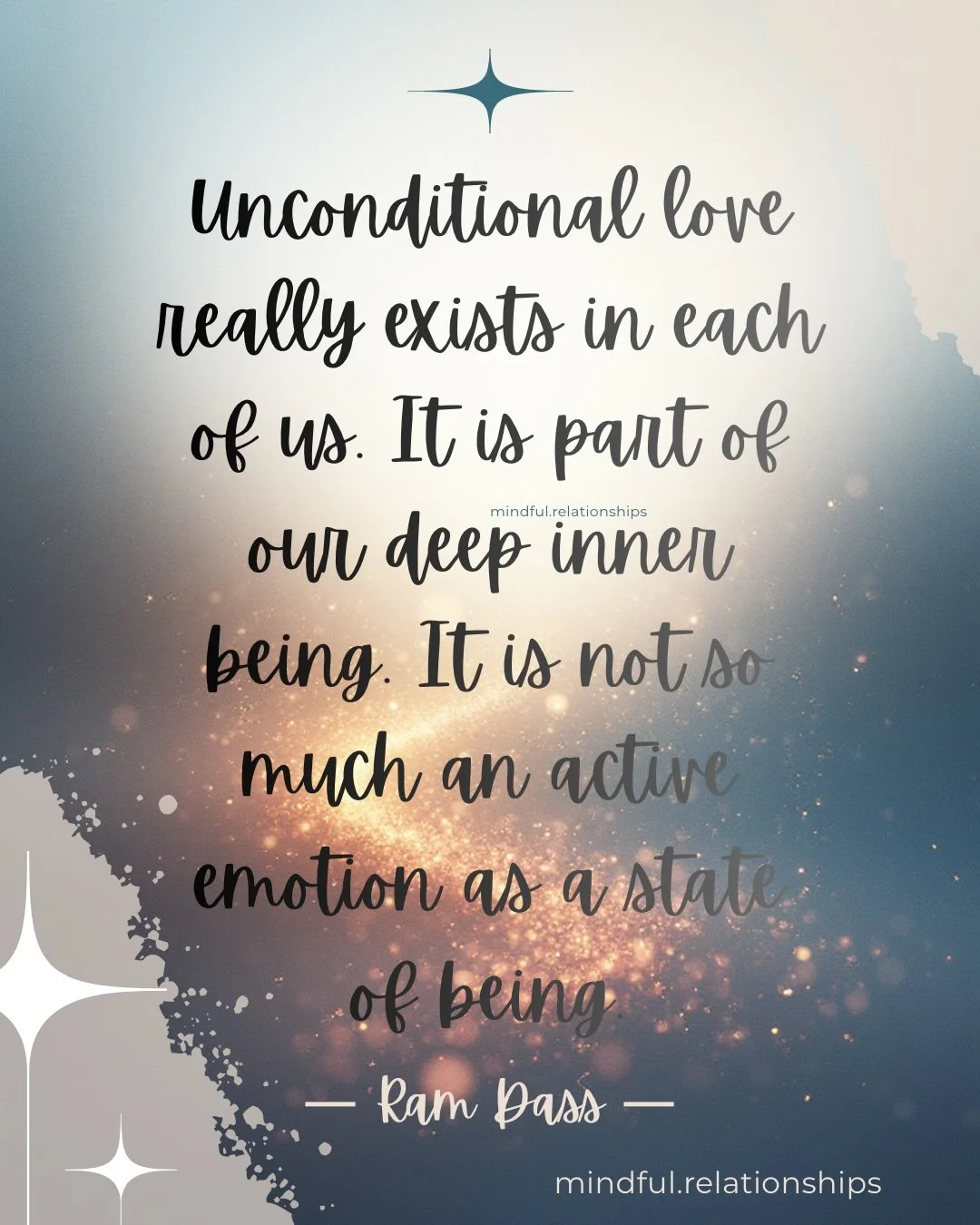
The voice in your head is not you! Anyone who's known me for any length of time, you've likely heard me talk about this with great enthusiasm. Back in 1998 I was introduced to this concept by the first therapist with whom I really felt seen (not my first therapist, just the first one with whom I felt really cared about me). Her name was Mary and she introduced this concept that the voice inside my head wasn’t me, it was the voice of socialization, and she identified it as the voice of “the critic.”
I'm not sure why this hasn't caught on in the world of psychology with everything that has become so popular. There still seems to be a stronghold on identifying with that voice inside the head. You hear it all the time, “I’m hard on myself. My negative self-talk. I should have more positive self-talk. I’m a procrastinator.” And so on.
I'd like you to consider something. I want you to consider the possibility that you do not generate the thoughts that show up in your mind. If you find yourself wanting to argue with me, I encourage you to pause and just take this next 24 hours and pay attention to that possibility. This doesn't mean we don't indulge the thoughts in the mind; we do…all the bleeping time! This is what I call “swimming with the sharks.”
Imagine a neighbor coming and knocking at your door. You go to the door, you open the door, and this neighbor starts criticizing you, yelling at you for all sorts of things. And you take it, explain yourself or argue and criticize back. Neighbor goes away and comes back the next day and the next and the next. And you keep answering the door. Think of those thoughts in the mind as that pesky, often abusive neighbor. Similarly, you go to the door, answer the door, open the door, and engage in dialogue or a fight with that voice. You feel beat up, exhausted, depressed, enraged, panicked, add your own. But because the voice is inside your own head and it sounds like you, it's so easy for us to believe it is actually “me.”
In the Buddhist practice that I'm a part of which is based on the spiritual teachings of Zen teacher Cheri Huber, we call this voice egocentric karmic conditioning/self-hate. I really love how that got put together.
Egocentric - everything focused on ego (me/mine).
Karmic - every individual is going to have their own karmic tendencies (patterns/habits/tendencies).
Conditioning - classical conditioning (think Pavlov), the process of being conditioned over and over and over again, which given the above all results in…
self-hate – see above
And there you have it, egocentric karmic conditioning/self-hate. It’s a powerful phrase that sums up the root of suffering. We must stop identifying with that voice. That voice is not you. It is not me. I’m like a dog with a bone around this principle because I have been the first beneficiary of practicing this wisdom. When I identify with that voice inside my head and I stay in that conversation, very shortly, I feel like doo-doo emotionally, physically, spiritually, psychologically, all of it. It talks people into jumping off bridges! Now, technically, could we just stop listening to that voice? Would that change your life? Technically, yes. This is a very popular orientation, the world of quick fixes and “short-term” therapy. “Change your thoughts, change your life.” I experience these platitudes as a form of spiritual bypassing and toxic positivity because while technically accurate, they oversimplify the arduous and courageous journey of healing.
From a compassion-based awareness approach, one must begin to turn attention to all of the human's life experience that needed (and still needs) compassionate witnessing but never received it. We cannot leapfrog over that part of healing. Healing is not possible without compassionate witnessing. As I heard oh so many years ago in the 12-step program:
“You can't avoid it, go around it, under it, or over it. You have to put on your shit boots and walk straight through the shit.”
However, if we visit those painful lived experiences of the human without a compassionate witness, it's trauma all over again. We have to learn how to find the compassionate witness within ourselves by first finding it in another. And in my role as a psychotherapist, I get the honor of being in that role for people every day.
The brain references what it knows, what it has been historically presented with. This means if you have not been consistently provided experiences of compassion, love, curiosity, and support (all attributes of safety), then you won't know how to do that for yourself. This can be the gift of a compassionate, skilled, present therapist.
One of the most profound experiences that drew me to this particular practice is wanting to feel about myself the way they seemed to feel about me. They reflected and treated me consistently in ways I’d never had before. I was introduced to an experience of the Unconditional that the heart longed for (because the heart IS Unconditional Love). They reflected this to me over and over again. In these experiences I was being invited to find my way to that within myself via my interactions with another. It was NOT an immediate awakening because I still sought that out externally. During those years I still believed deep down that there was something wrong with me, something irreparably flawed. And if I just did the right number of workshops or meditated enough, worked with enough clients, or did this exercise or that workshop, that somehow, I would magically feel about myself the way I wanted to feel. And that's partially true, because in continuing to show up for myself by attending things and being with kind people that reflected what was true, I was giving my brain new experiences to reference. At the same time, I was still believing that there was something wrong with me. The difficulty at this stage is that my choices were still being informed by the lie, that something is wrong with me.
What I also did not realize was that while at that time I had done over a decade of therapy, there were vital experiences I had yet to witness. Heck, I could write a book on my family and my trauma. I could map it. I could tell you what, when, why, where, how, who, all of it. What I hadn't yet done was allow myself to visit and witness all of these experiences that I’d learned to bury, repress, avoid. I’ve been known to joke that I deserve an Oscar for the fawning I did to survive (I’m sure many relate to that joke). Fawning is the lesser-known 4th “F” in survival strategy (Fight, Flight, Freeze, Fawn).
I had mastered talk therapy…aka the left brain. What I had yet to do was spend time in the right brain, the world of emotions and physiology, aka the nervous system. All of these intellectually known difficult life experiences were still being held, buried, repressed because I was terrified to feel any of it. Because if I felt it, I didn’t know if I would survive it. And in our Western socialization, we have also conflated thoughts and physiology. If there is a thought in the mind or an unconscious belief, and you have sensations in the body, the sensations confirm that the belief must be true.
Let’s use an example; let’s say a person is in a situation and there are the following thoughts: “I don't feel safe. This person is going to hurt me, but I can’t say anything. I don’t know what to do.” And my lived experience has historically confirmed these thoughts. There are corresponding physiological sensations of muscle tension and tightness, rapid breathing, body gets warm, throat constriction, heart pounding, stomach tightens, nausea. Sympathetic nervous system (fight/flight) starts the experience of anxious/worry and/or irritation. Maybe you argue or push back or get sarcastic (fight) or decide to excuse yourself (flight). Maybe you stay and drop into parasympathetic (freeze) and go blank, shut down, can’t think or move so you just bide your time. Or you have a combo of sympathetic and parasympathetic (fawn) and behave in whatever way you determine will get you through the situation as peacefully as possible.
These are unconscious survival strategies; your brain is wired for survival, and we all have dominant strategies opt in when the nervous system is in state of overwhelm. So if this is happening to me in the present day and I haven't done the work to understand what's actually going on with me, I will believe whatever the mind tells me. It doesn't mean it's true. (*Sometimes a person’s path is that they are making unconscious choices, bringing unsafe people into their life, and they don't know how to not do that. And they are perpetually reliving their trauma histories in their present life.) Until we bring conscious awareness to our lives, we will only have the options we know based in survival. With practicing awareness, we bring into consciousness that which was unconscious and that will eventually give us more options.
When someone’s actions active unresolved trauma, the nervous system reacts automatically and without awareness I will unconsciously accept the thoughts as present reality. Without awareness I end up living in a different version of hell every day. I will be reliving and reenacting my past trauma in present day. That is quite literally the only option when we don't look at what's really going on underneath the surface.
We are not required to heal, to face our past. It is a choice. Those who find themselves on this path usually start from a place of deep suffering. It takes great courage to choose healing. There are many paths and many within each path: psychotherapy, yoga, music, movement, art, meditation, or… What I find is that most people find their way to all of these over the course of their life because all provide profound aspects of healing. But we each have to start with what speaks to us in the moment.
Something to consider is that there is no expert out there who is going to fix whatever's going on within you, because:
There is actually nothing wrong with you. Nothing. There are clues, indicators, signals occurring alerting you something/s needing attention. That is not the same as something being wrong with you.
It is so easy to either put someone on a pedestal, to think they know and, therefore, you don't know. It doesn't mean they don't have lots of wisdom based on their own practice and their training and their lived experience. But they are not experts on you.
My encouragement is to find a space where your authenticity is mirrored while you talk about your struggles. And this person can reflect your adequacy, your lovability, your inherent goodness, while pointing to the dynamics and patterns going on within you. Additionally, being provided with information (left brain) about what's going on for you while also creating experiential opportunities for healing (right brain). This can take the form of talk therapy, guided imageries, somatic work, EMDR, written exercises, role-plays, and/or other modalities that assist you in learning how to stay present in micro-moments with what's going on with you while in the presence of another that is safe. It needs to be at a pace that honors what your nervous system is communicating and all offered from the lens of Unconditional Love and compassion.
This journey is going to look unique to each person because every person's path is unique to what they need and when they need it. This process isn’t straightforward or predictable. Imagine it like a rollercoaster: there will be ups, downs, sharp turns, steep climbs, moments of celebration, times of betrayal, overwhelming feelings, bursts of joy, and a whole range of strong emotions and sensations. Sometimes you’ll have those “aha!” moments, and other times you might feel lost or discouraged.
If you stay committed to this journey, you’ll end up witnessing your entire life, every part of it deserves and is required to be seen. When you learn to look at your experiences through the lens of compassionate awareness, something powerful happens, you discover love and freedom within yourself. And here’s the important part, this transformation doesn’t require your circumstances to change. Real liberation comes from seeing and accepting yourself through compassion, not from waiting for things outside of you to get better. The Unconditional, love and acceptance that doesn’t depend on anything, matters most during the hardest times. This is how real transformation happens.
Which takes us back to the voice in the head. Depending on where you're at on the path of your healing, that critic voice, that egocentric karmic conditioning voice inside the head might be the only one you hear. Because it's the only one you're familiar with. Have you ever been introduced to something brand new? Say a car model you have never heard of or seen. Someone shows you a picture and tells you the name of it. And it is brand new to you. But now that you have seen a picture, you begin to see these cars and soon see them often. And at some point, you might even have the awareness of, “how have I never seen this car before?” Because you didn't know to look for it. This is the same experience. If all I know is hating myself and believing the conditioning I’ve been given, then I'll hate myself because it’s the “good person” thing to do. Then the following is also true: I need to get beaten up in order to do better. Worry is what keeps me safe. Procrastination is what makes me do a good job. Right?! These are all just coping strategies for survival based on what I know. And if that's all you've known, then that's what you're going to believe.
Here’s another option. There actually is another presence and all the spiritual paths point to it in whatever language they use, it is the Unconditional. How I heard it presented in my spiritual practice is, “I love you no matter what, and I'll help you be however you want to be.” Other language used: God, divinity, spirit, energy, the divine, life force, or add your own. Imagine standing in front of something majestical, the ocean, a forest, a butterfly, an animal, a flower, or whatever allows you to get in touch with that which can be hard to name. The encouragement is twofold .
Consider this possibility: What if that voice in your head is not you? What if that voice is a compilation of what you've been exposed to your entire life, which is going to be different for every single person depending on where they're born, what body they are born into, what part of the country, what generation they are. What if what you hear in the head is all made up based on what socialization you were born into?
If this is something you will consider, then I would ask you to practice identifying that voice in the head as something other than you. I call it, Notice & Name. Use any language you find helpful. You can use my therapist’s suggestion of “the critic.” You can call it socialization or ego, the voice, satan, or anything other than “I/me.” It is not you.If this voice isn't who “I am,” well, what else might be possible? Could you explore the Unconditional? This can be referenced as “the still small voice,” intuition, intelligence. One of the most powerful and poetic descriptors I've heard and resonate with is, “that which animates all”. What animates the oceans, the atmosphere, the plants, the mountains, humans, because we are made of the same “stuff” as Carl Sagan has stated.
"The cosmos is within us. We are made of star-stuff. We are a way for the universe to know itself."

What if that intelligence is who we authentically are? Seems intelligent doesn’t it! What we think is “me” is the socialization that we are steeped in every minute and every day of our lives until it becomes the only thing a person knows, sees, and feels. Now that is depressing!
Turning to the socialization (the voice in the head) over and over and over and over again is just what keeps us trapped and keeps us from experiencing and being lived by the intelligence that animates, the divine, the Unconditional. It is a powerful option to consider.
What if instead we learned to spot the conditioning, the critic voice, the ego voice? I call it Notice and Name. Then instead we turn our attention away from that voice and instead look for wisdom, compassion, intelligence, the Unconditional. This is what Compassion-Based Awareness Therapy is, providing a space for one to do this work and be in relationship with a compassionate witness so you can learn to find the compassionate witness within. We need both.
As you practice with this I'd love to hear about your experience.
In lovingkindness,
Laura
